Jeremy Leung
Station ElevenJeremy Leung, called the sixth guitar of the Travelling Symphony, is known through his ties to Charlie Harrison and their daughter, Annabel, and through the mystery of the family’s disappearance from St. Deborah by the Water. Though markers bearing all three names appear in the town’s graveyard, the undisturbed ground beneath them shows that they do not mark burials; the family’s whereabouts remain unknown.
Identity and Family
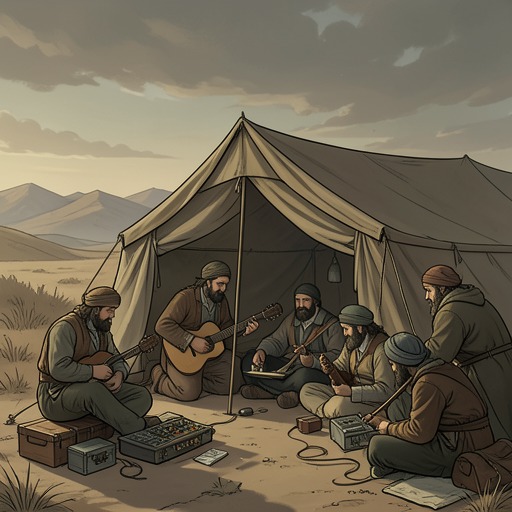
Jeremy was Charlie Harrison’s husband and a member of the Travelling Symphony, which had left the couple in St. Deborah by the Water about two years before returning. Charlie was pregnant when they settled there, and the troupe had arranged for them to stay in the former Wendy’s by the gas station so she would not have to give birth while traveling. Their child, Annabel, was later identified as an infant on a marker alongside her parents’ names.
The Family’s Disappearance
When the Travelling Symphony returned, a teenage sentry recognized the troupe and directed it to camp at the Walmart. The performers expected to find Charlie and Jeremy, but neither appeared. Kirsten Raymonde went to the former Wendy’s looking for her friend Charlie and explained that Charlie had been there with her husband, Jeremy, while pregnant. The search produced no news of the family’s destination.
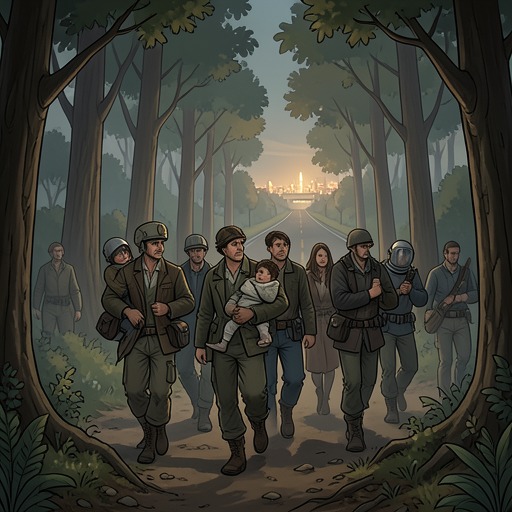
A member of the troupe later reported what an acquaintance in the motel had told him: an epidemic had killed thirty people, including the mayor, after which control of the town changed hands. Twenty families had since left, among them Charlie, Jeremy, and their baby. The acquaintance said no one knew where the family had gone and advised against asking. The account confirms their departure from town but does not establish what happened to them afterward.
The Markers and Their Meaning
In the graveyard, three markers stood in a row, bearing the names Charlie Harrison, Jeremy Leung, and Annabel, each dated July 20, Year 19. The sight initially suggested that the family had died. Dieter pointed out, however, that no one was buried beneath the markers: unlike the graves dug after the epidemic, the earth under these was flat and undisturbed.
The markers therefore distinguish the family’s disappearance from the town’s documented deaths. An earlier cluster of thirty actual graves corresponded to the epidemic, while some later markers—including those for Jeremy and his family—stood above no graves. The evidence leaves the markers’ purpose unresolved. Jeremy’s story is consequently defined less by a known fate than by the gap between a community’s record of loss and the fact that his family’s bodies were never buried there.